Devlog 026 / Project
November Development Update
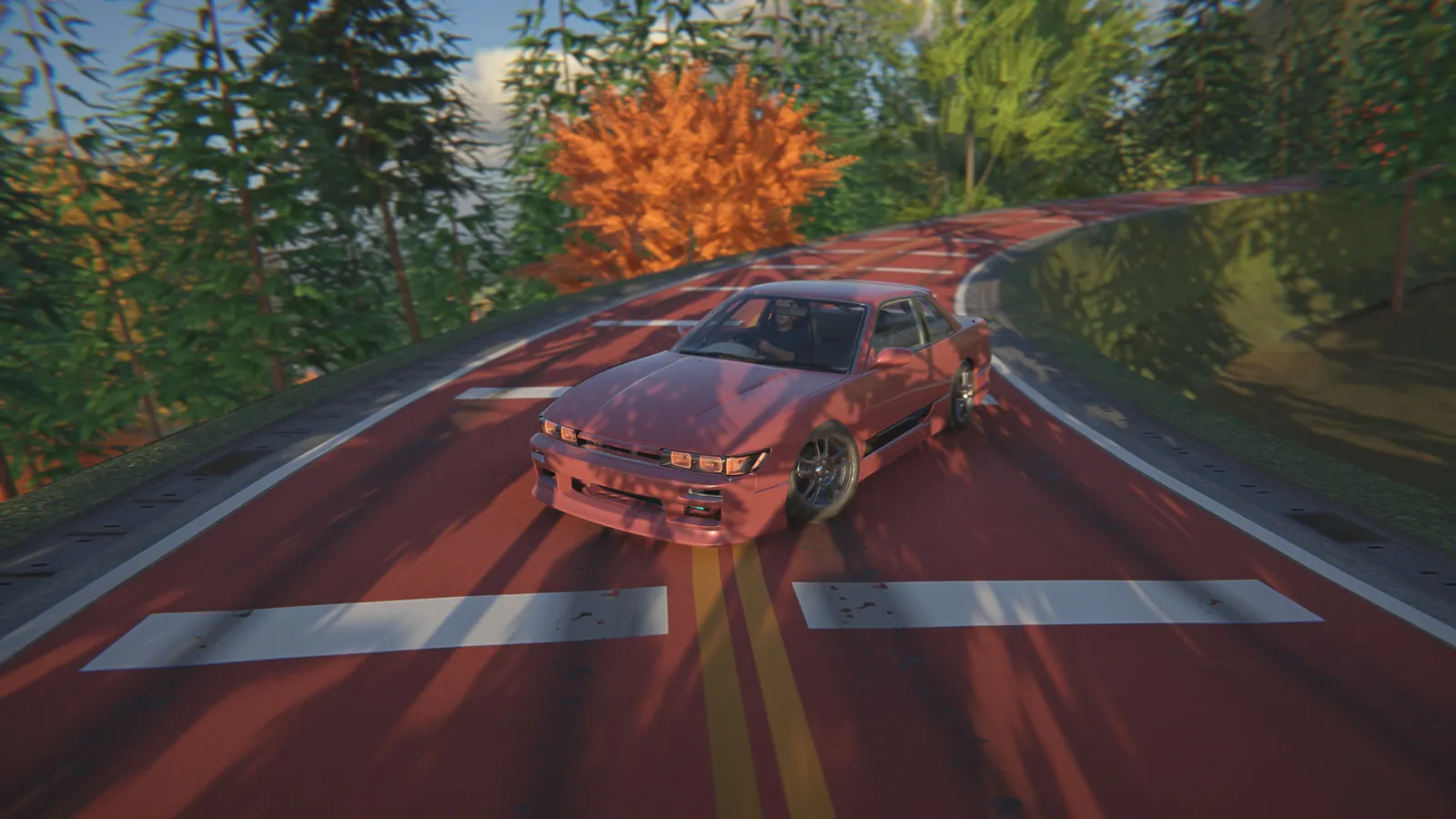
More than 400 updates have gone into Kourenagi since the earlier development posts: new paint, rebuilt tyre smoke and exhaust flames, a much larger camera system, changing seasons, revised weather, human characters, new interface layouts and more work on driving and ownership.
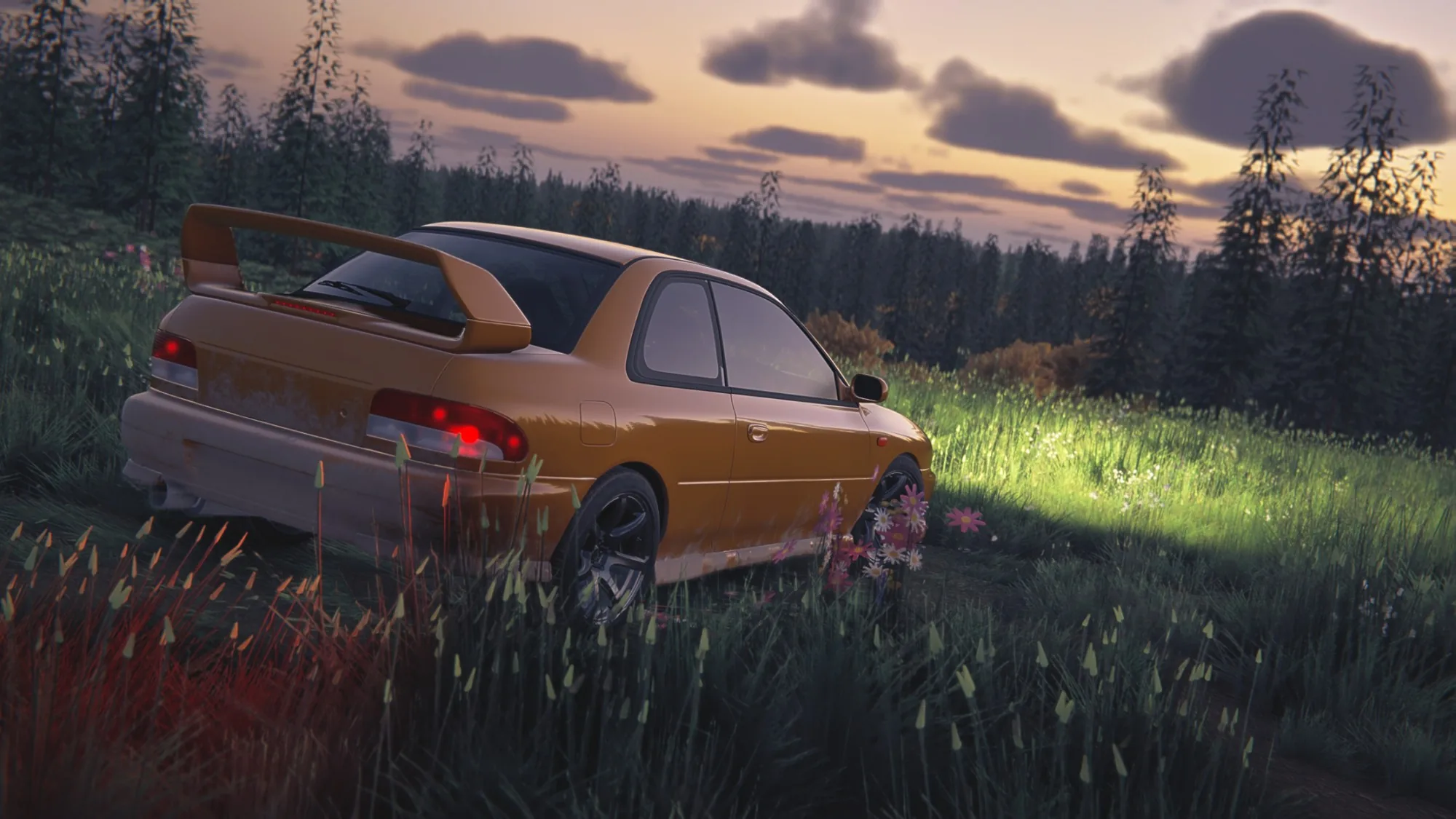
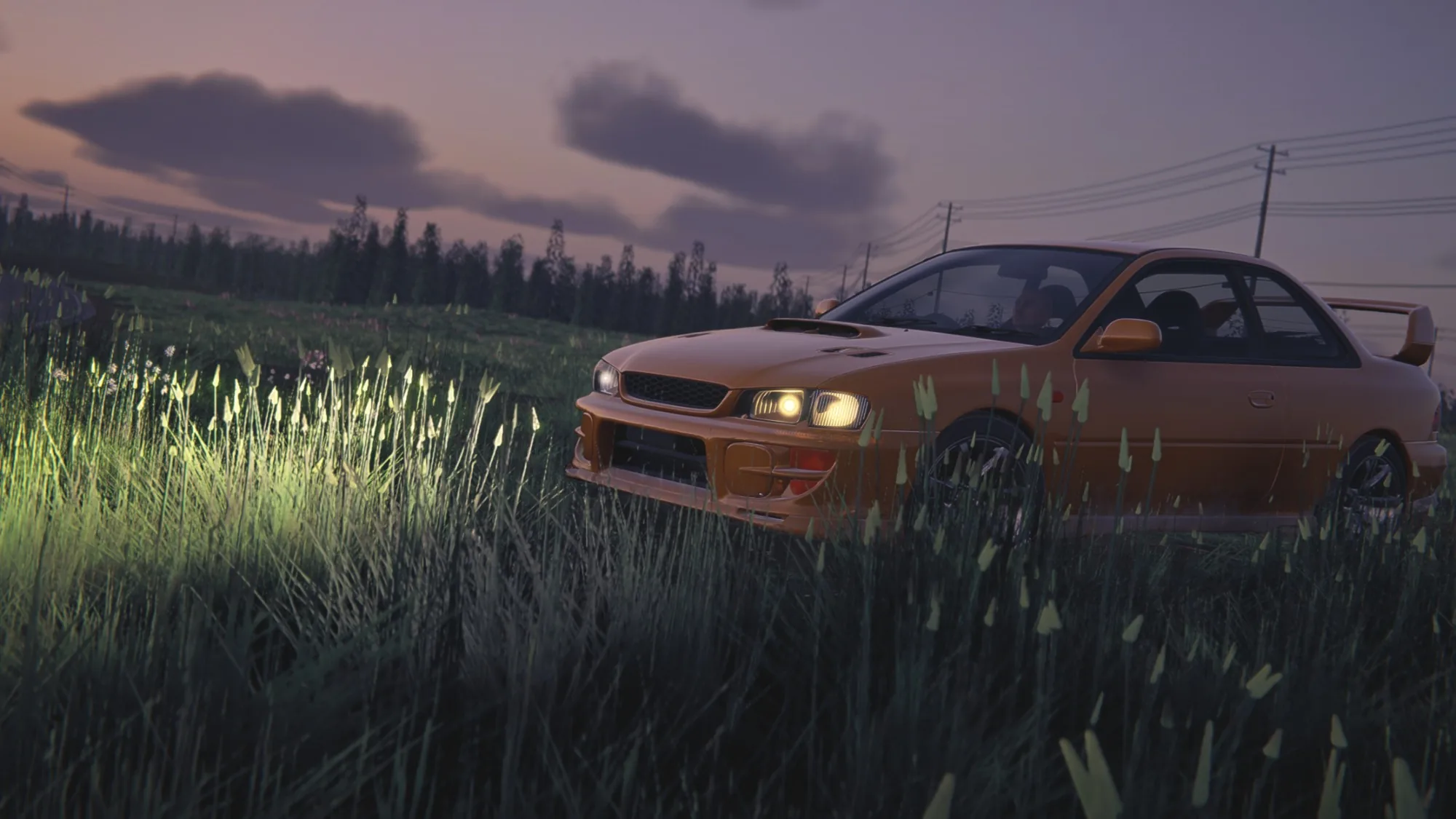
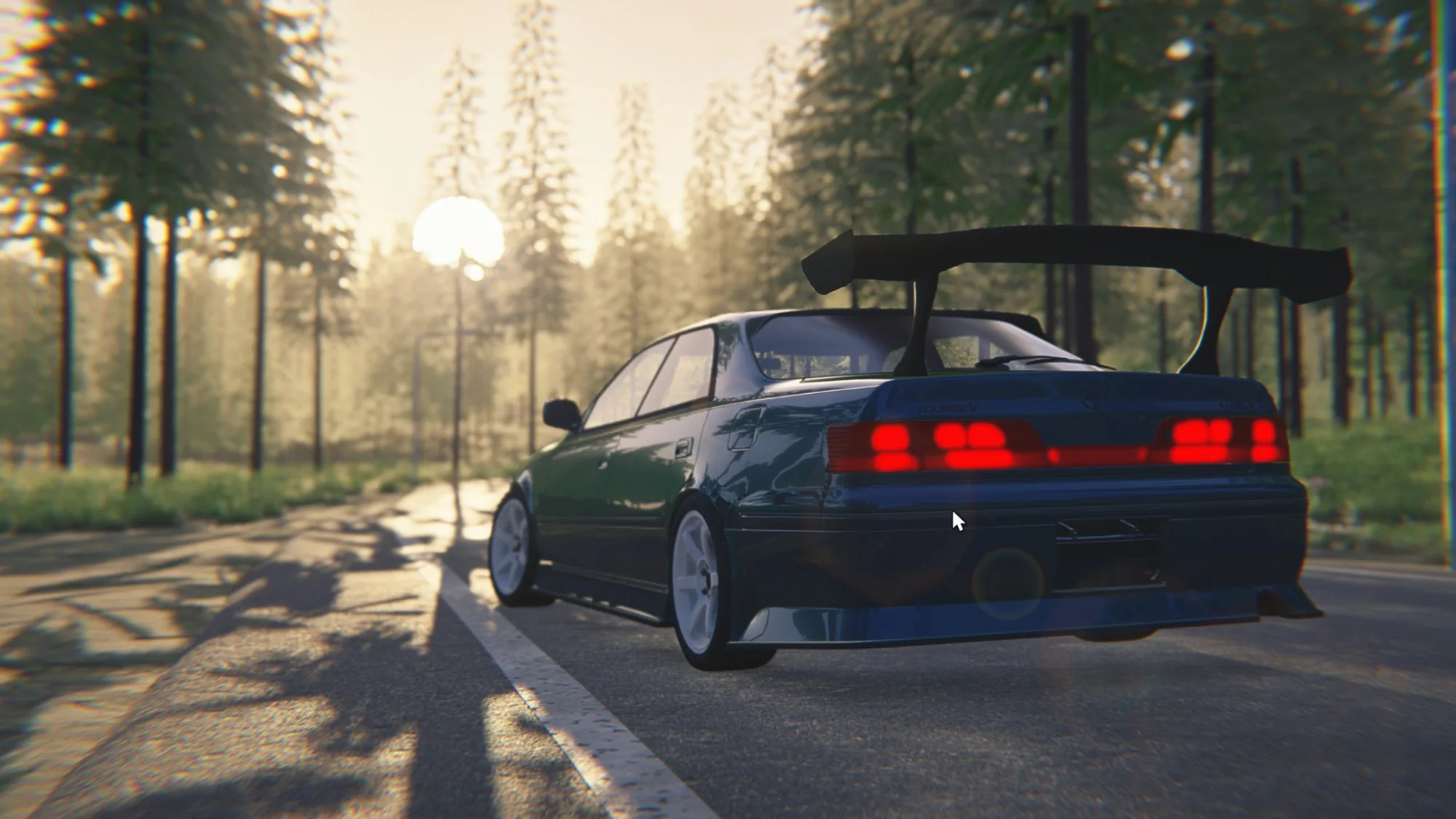
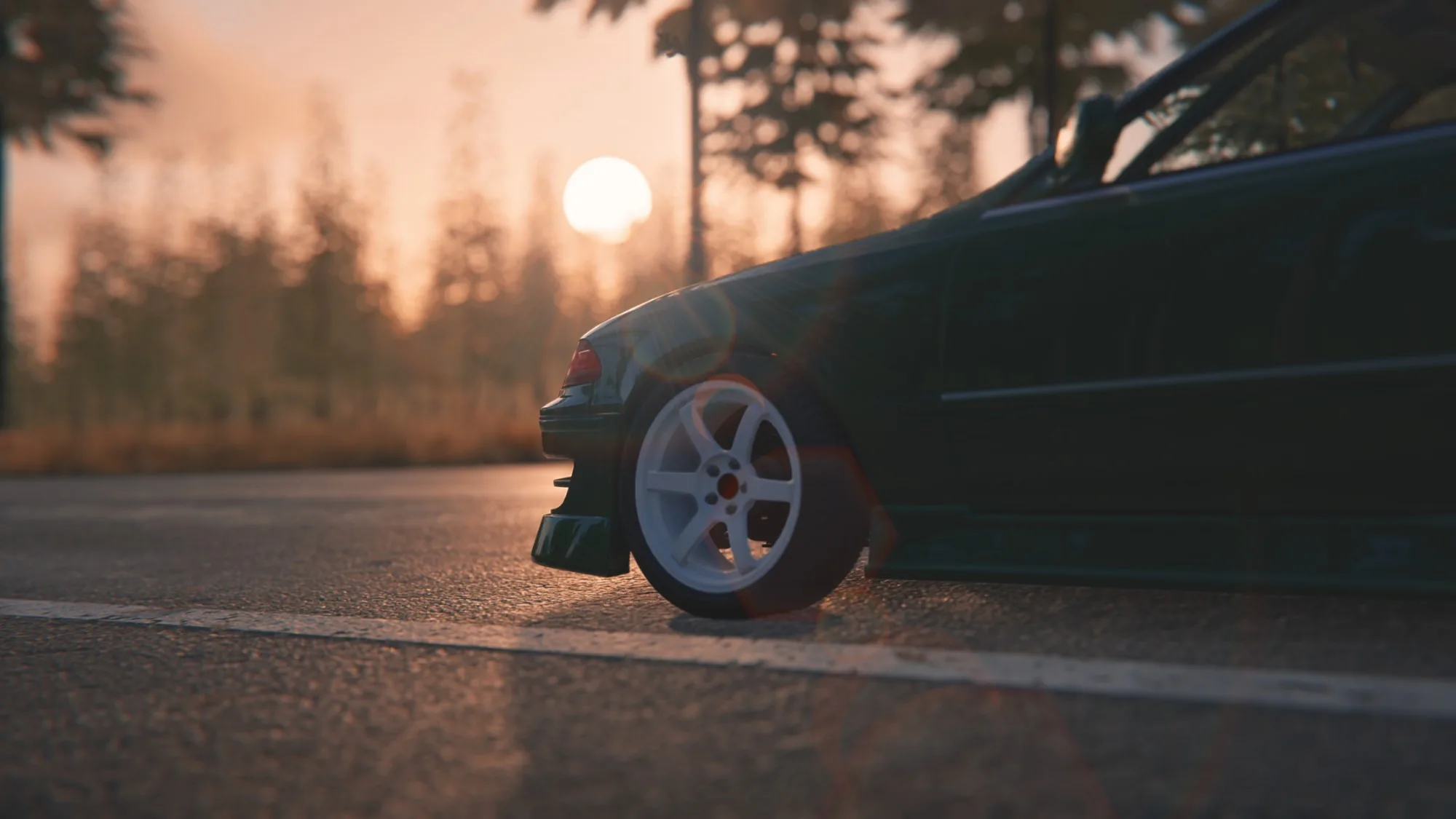
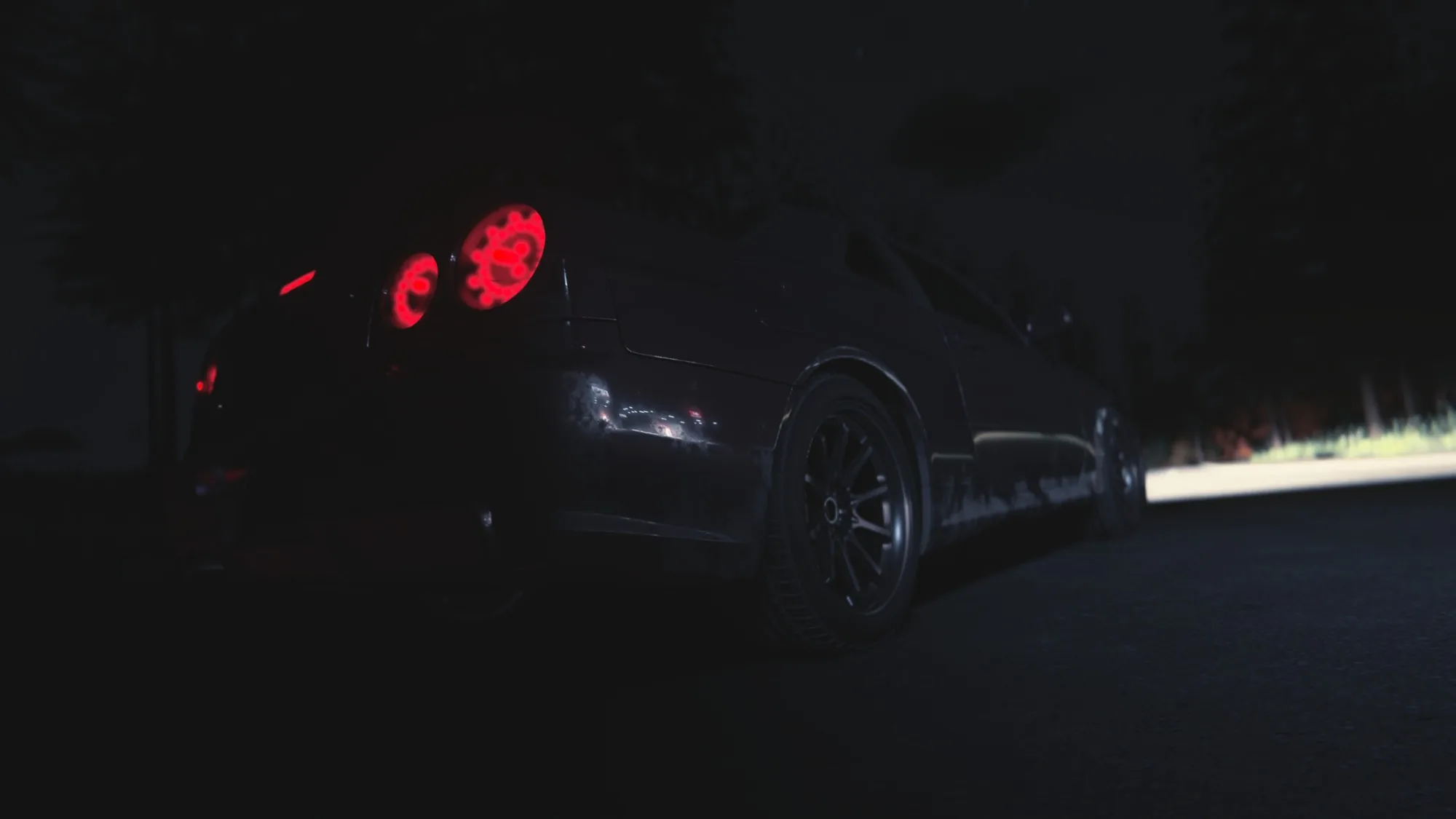
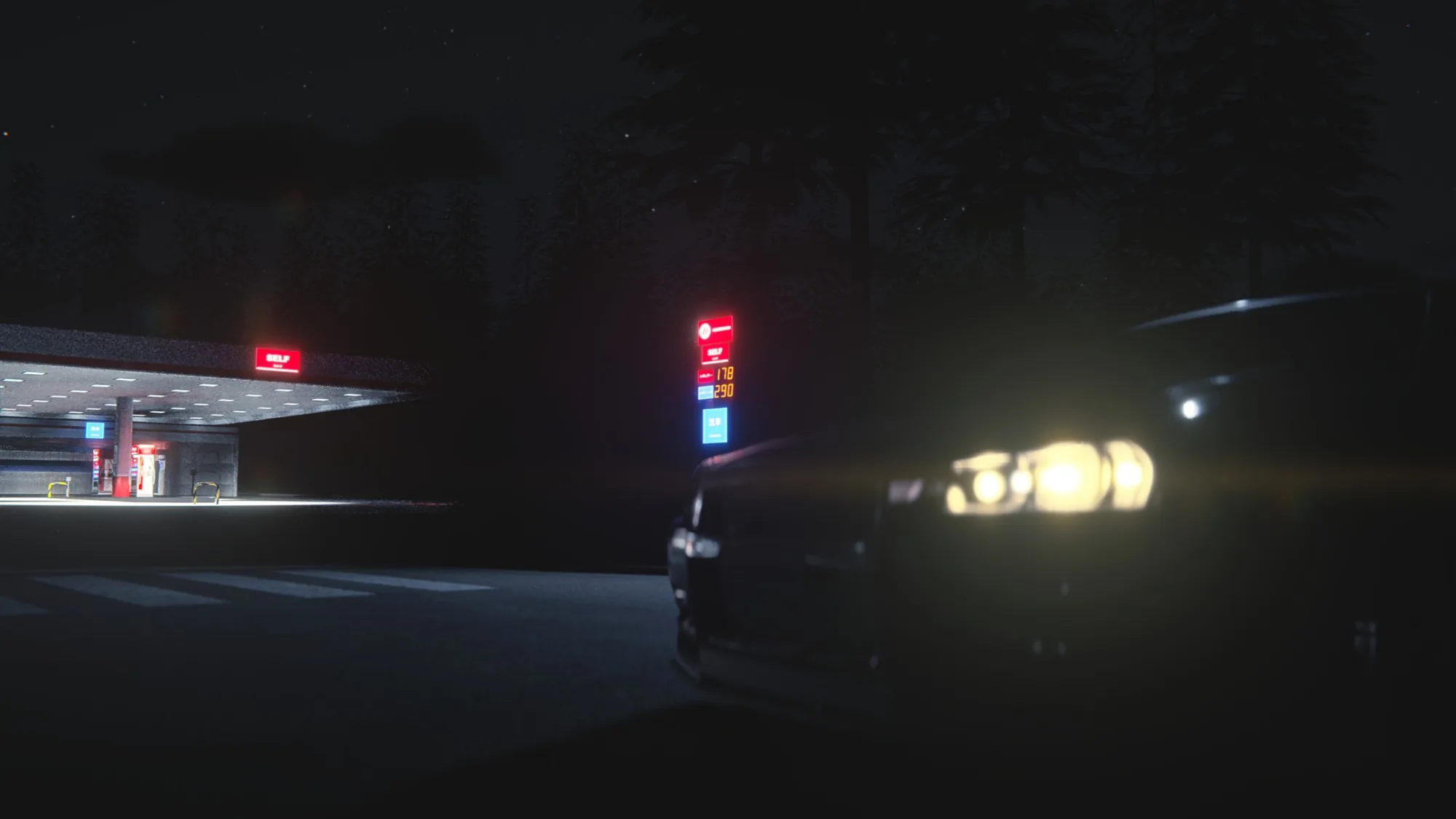
Every screenshot in this post was taken in-game with the new camera tools. Kourenagi remains in private testing, and these systems are still being tuned.
Photography: manual camera, LUTs and Lightroom
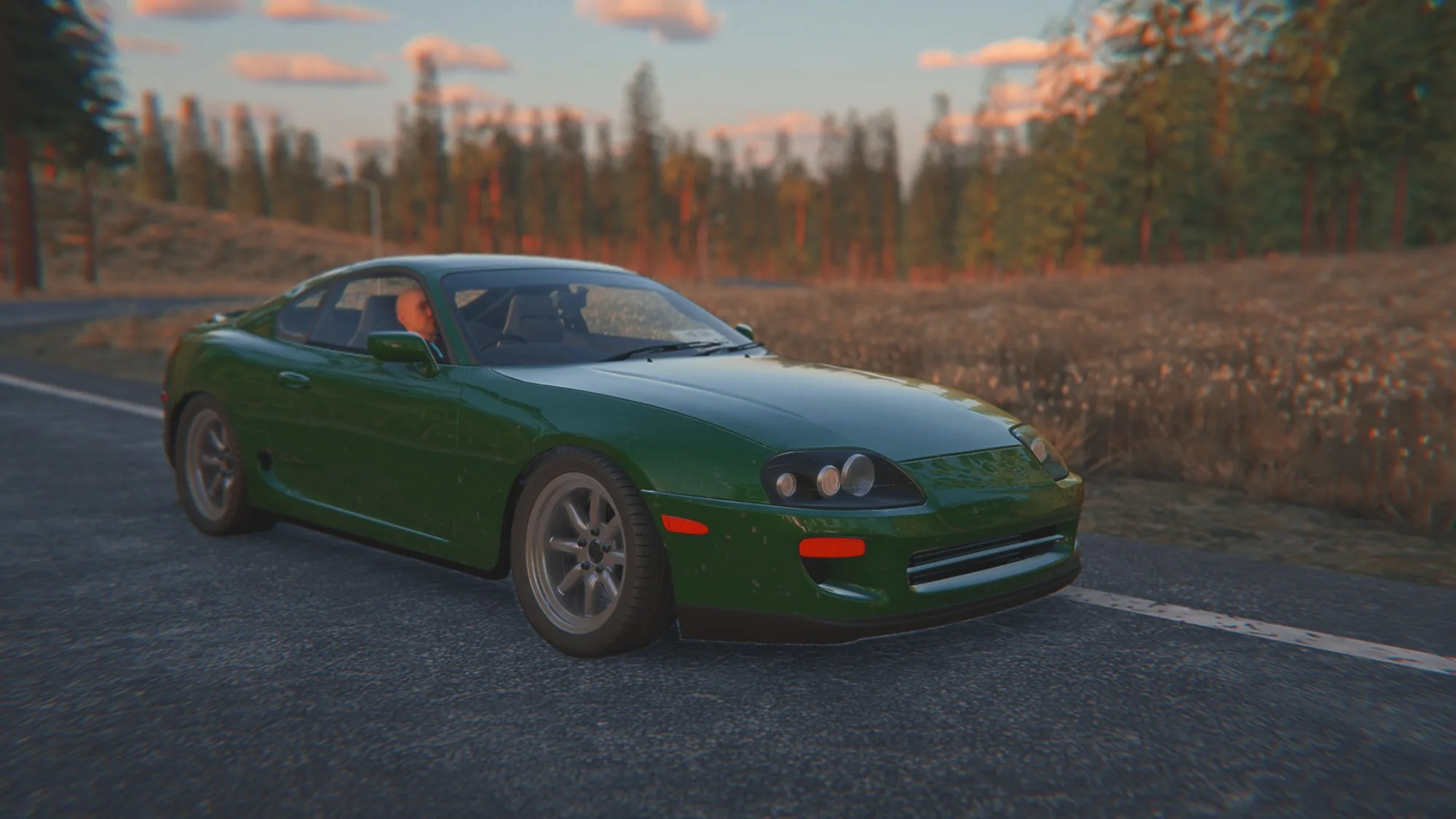
The phone's camera has grown into a proper manual camera. It has physical controls for ISO, shutter speed, lens and sensor settings, with optional ISO grain and shutter-related motion blur. Studio point and spot lights can be placed around the subject, with adjustable colour, temperature and intensity. Shots can be animated through keyframes covering position, lens, look and lights.
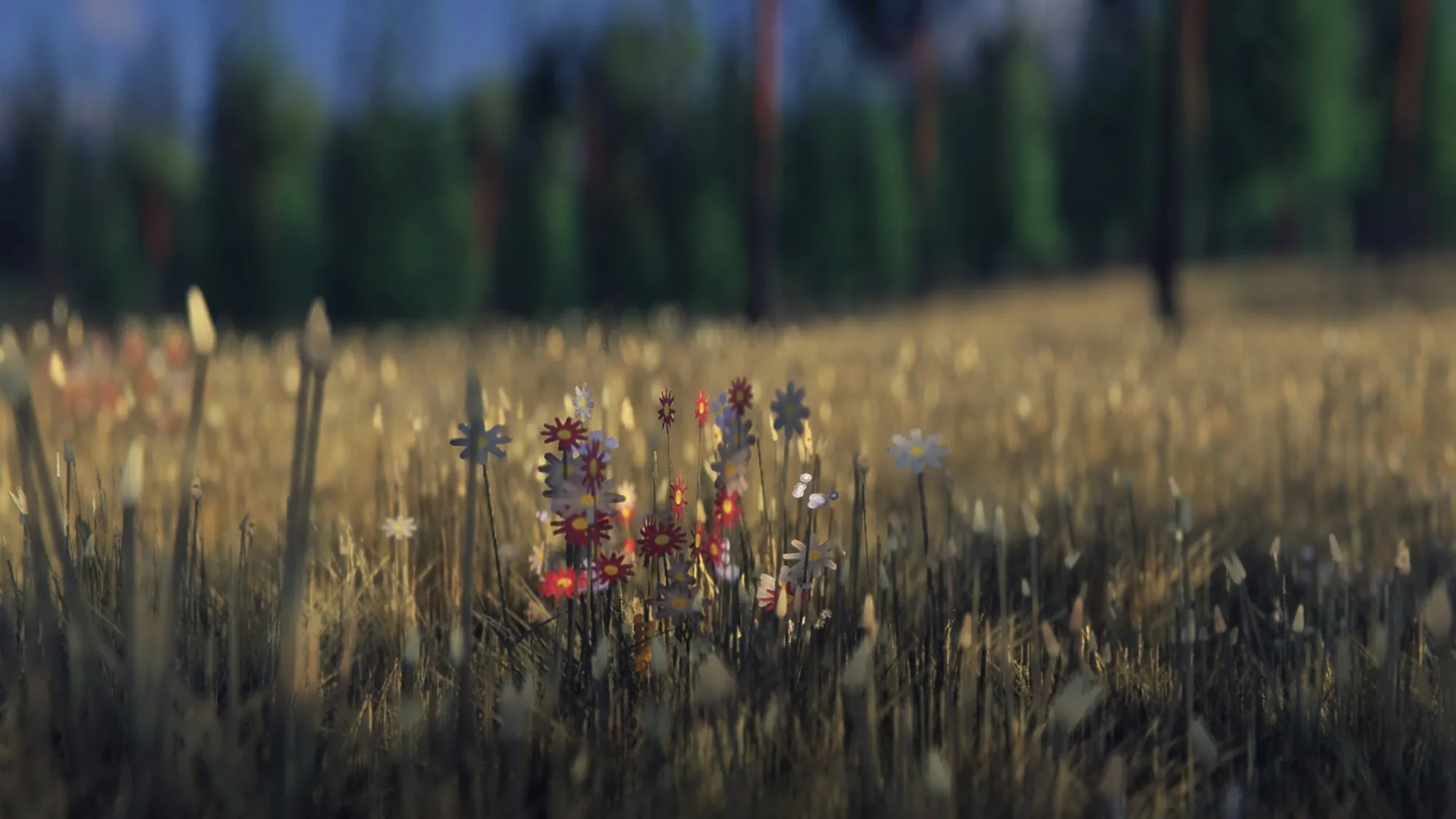
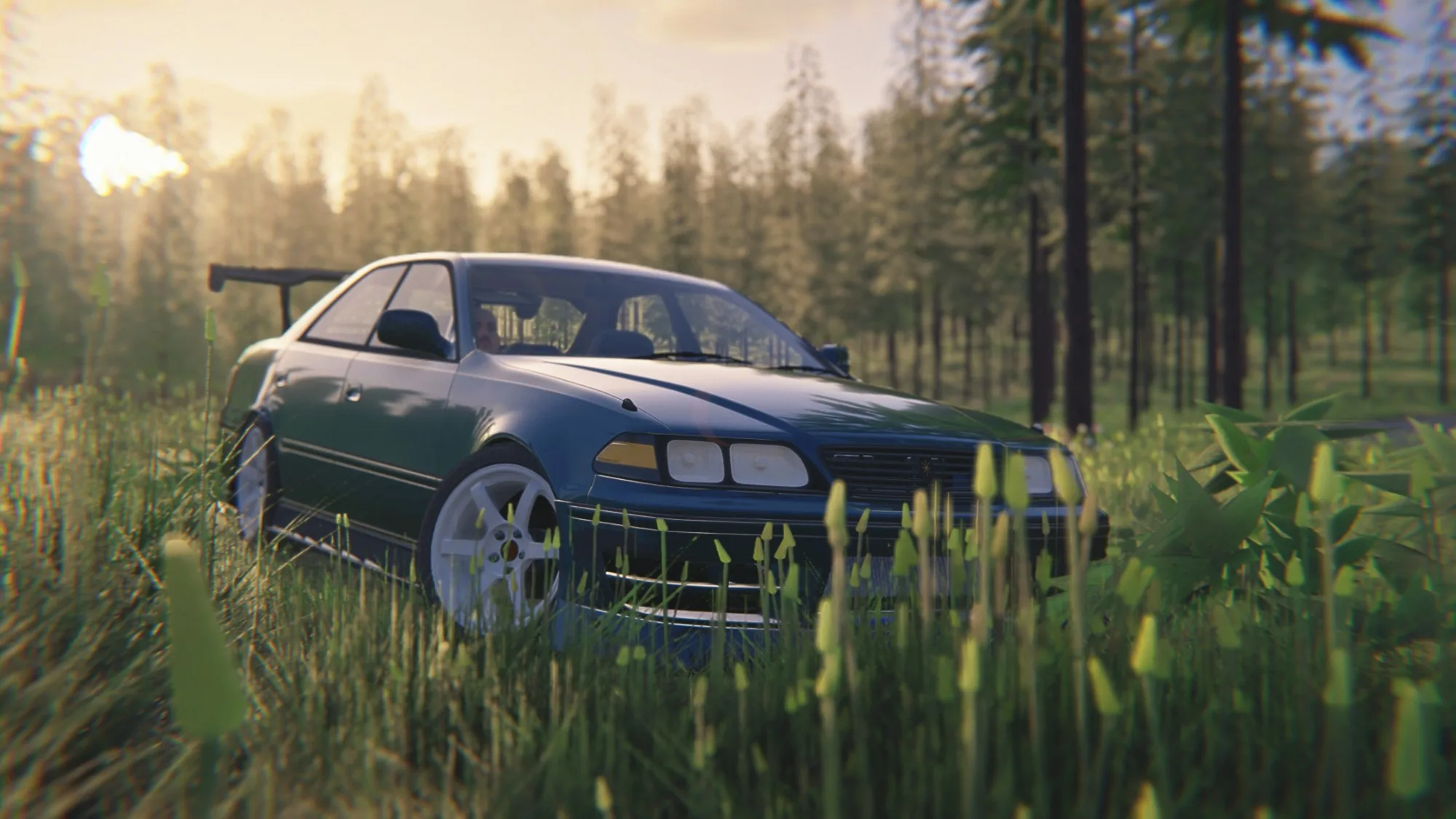
The look of an image can be shaped with colour adjustments and LUTs directly in the game. The four meadow shots in this post are the same frame with four different LUTs applied.
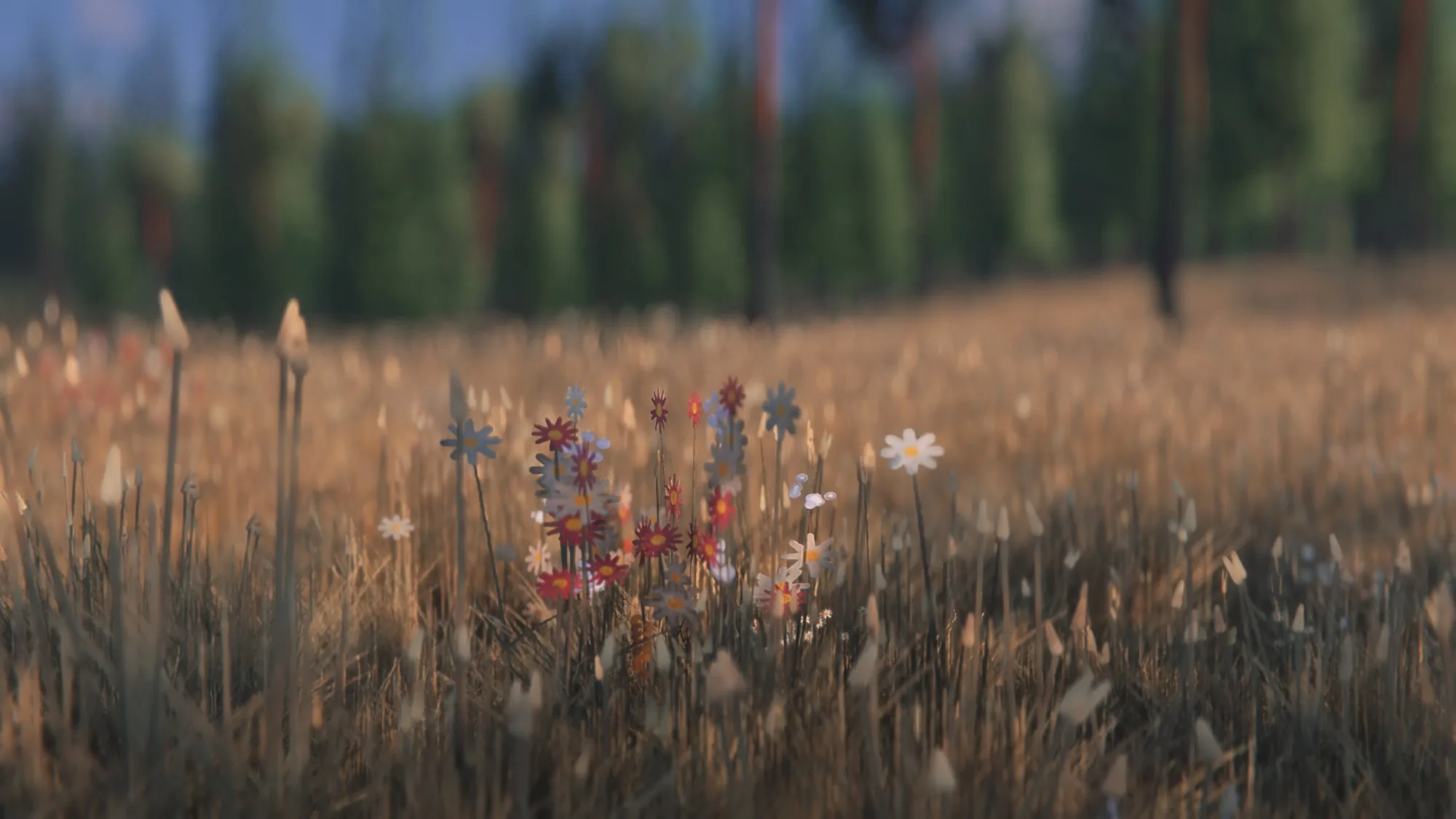
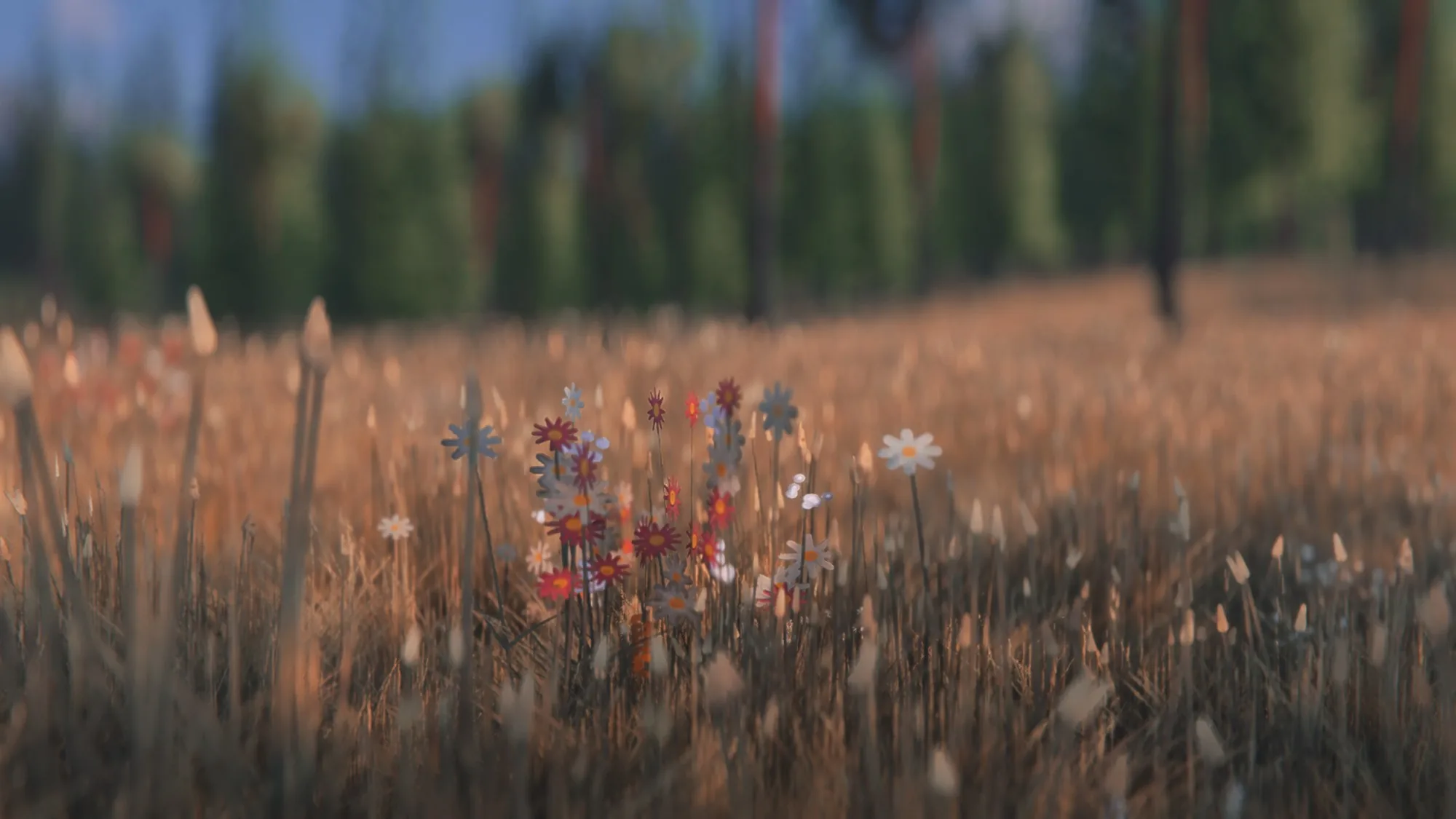
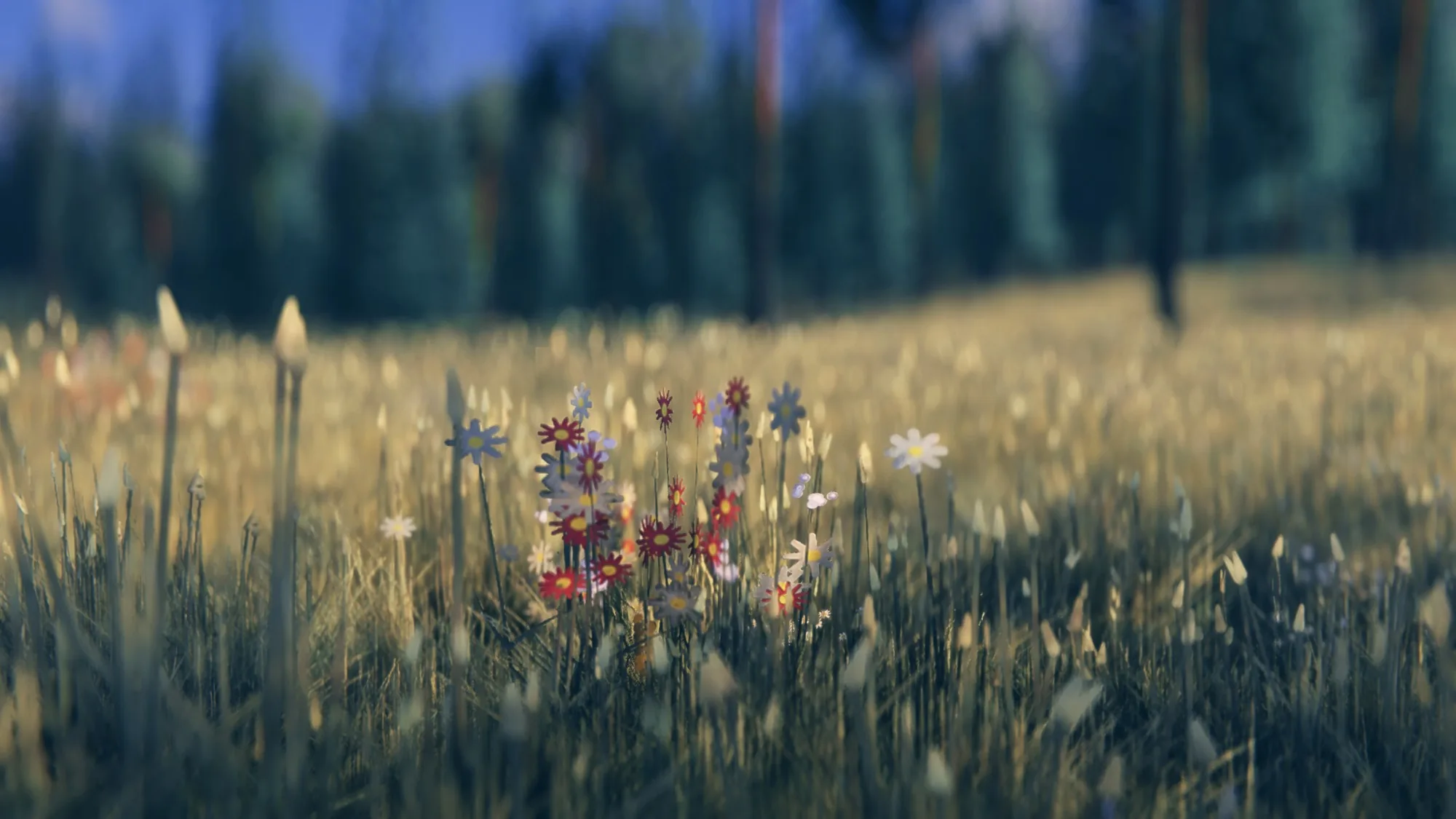
I also grade the screenshots afterwards with Lightroom presets, so the game can produce a clean capture and the final look is a separate choice.
Time, weather and season controls are available from the camera workspace too. In multiplayer, shared world changes remain under the host's control.
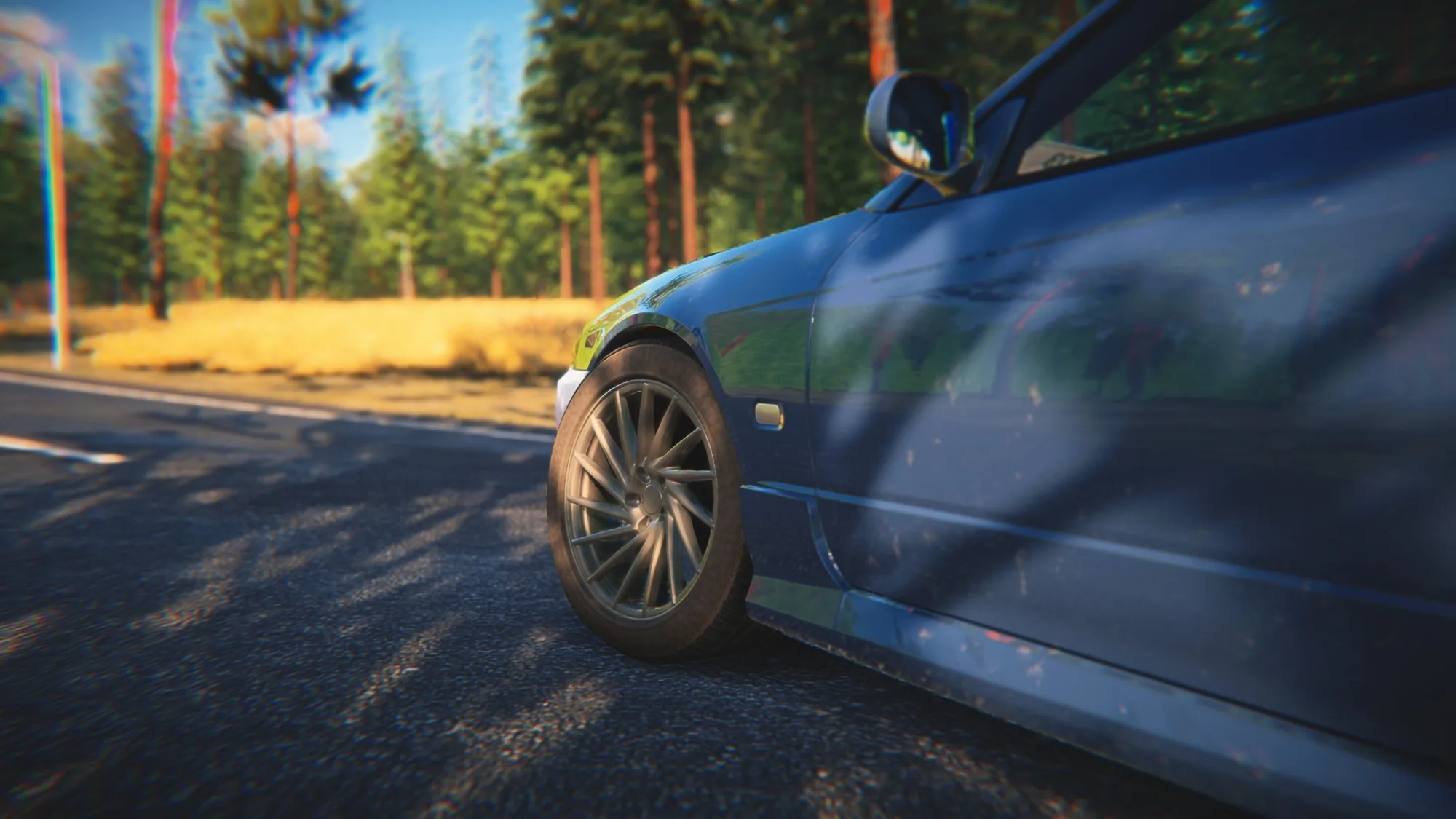
Cameras you can fit to the car
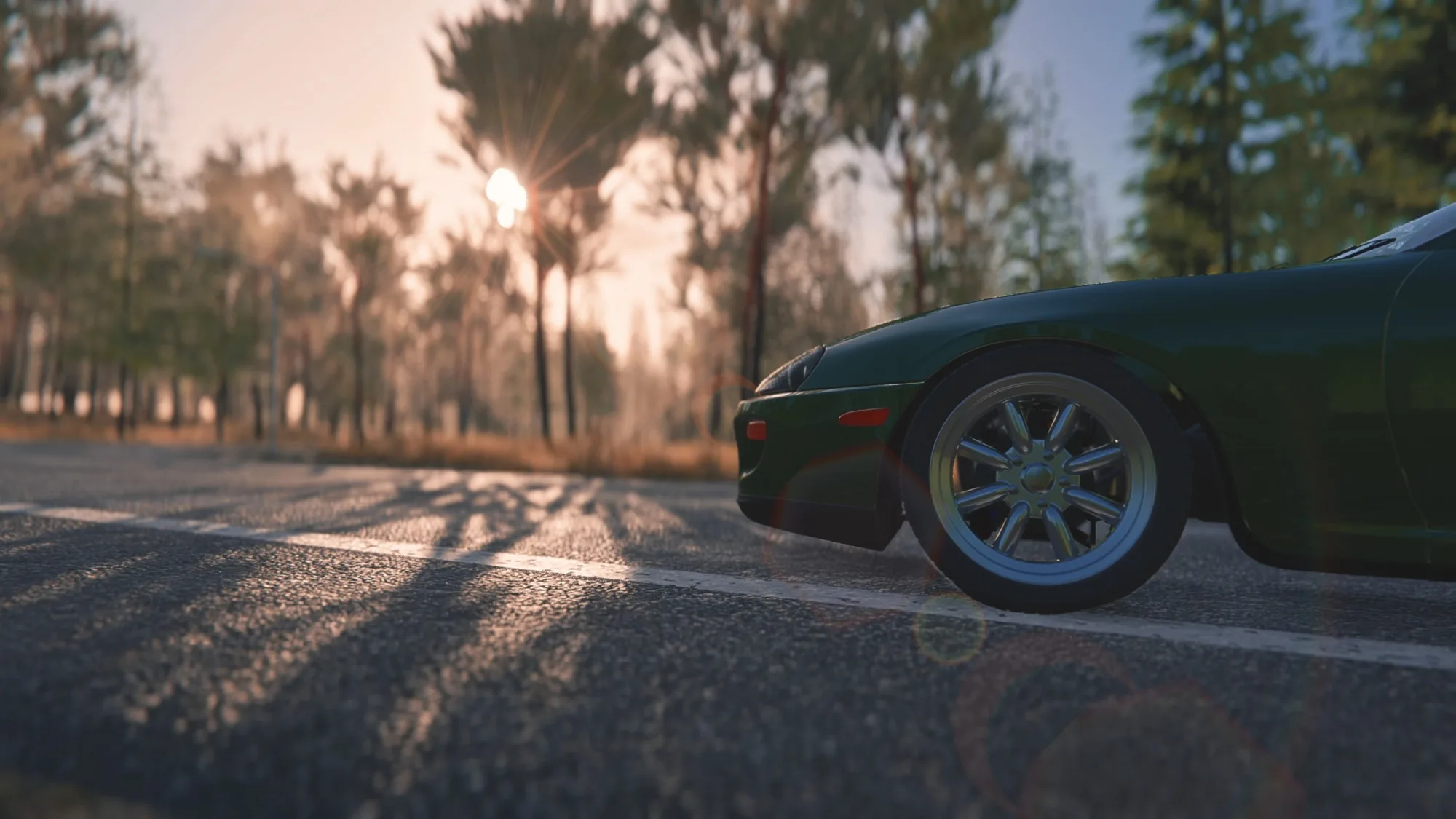
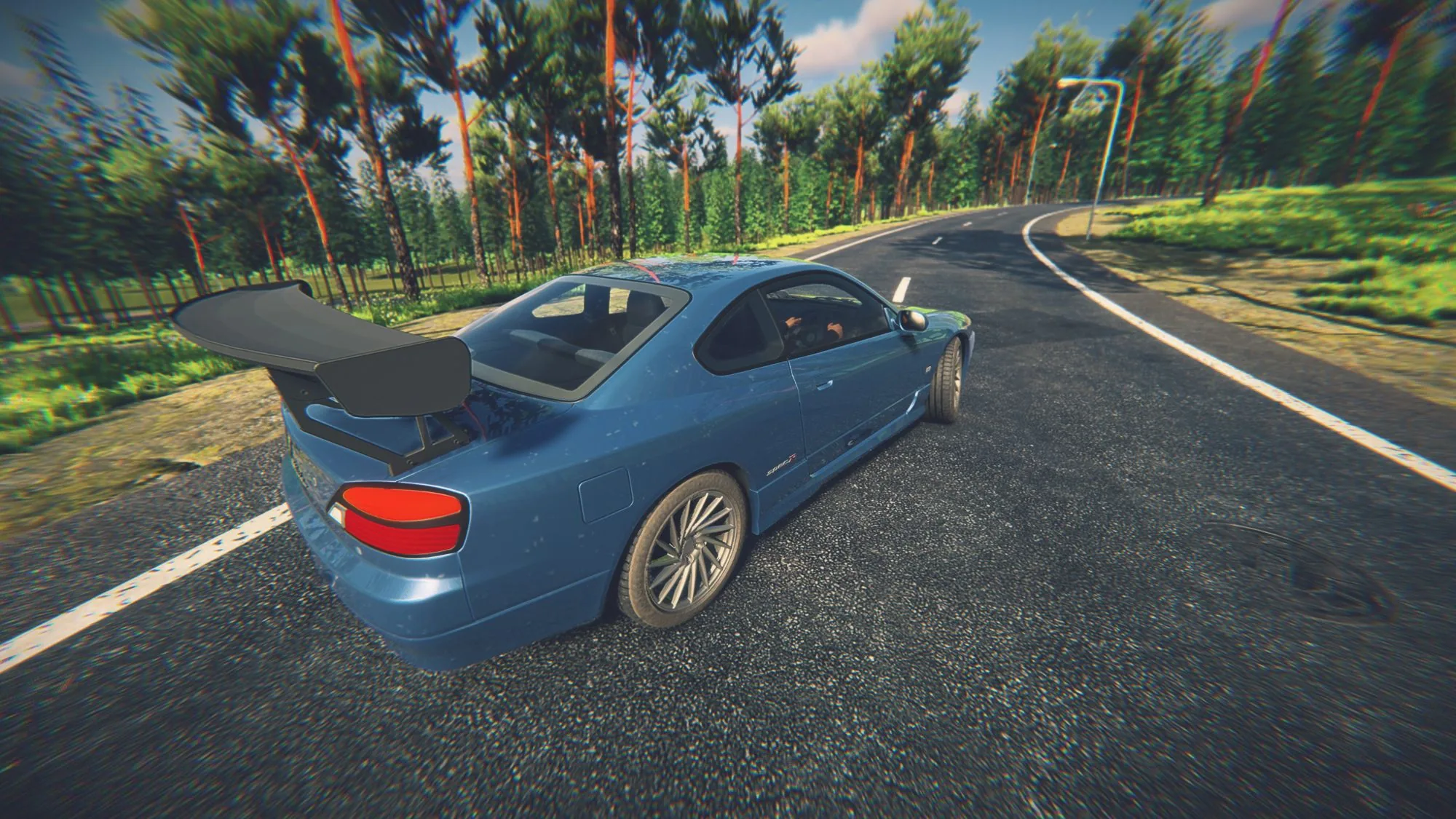
Mounted cameras are now a build system. The workshop offers camera slots, suction-cup pole rigs and smaller stick-on mounts on the roof, rear glass, boot, bonnet and other suitable surfaces. Cameras have ownership and cost, can move between compatible mounts and cars, and can be tried on the car before BUY AND FIT confirms the purchase.
Camera models differ in field of view, lens distortion, edge softness, colour response and stabilization, from action cameras to compact cinematic and 360-style views. The pole responds to its length, material, camera mass, vehicle movement and airflow, and TEST VIEW shows the mounted perspective before you leave the workshop. Exposed mounts can add wind and vibration to the recorded sound.
The driving cameras have also been extended. Transitions between views are smoother, feedback cameras respond to acceleration, steering and drift angle, and road look-ahead keeps the next piece of road in frame. New viewpoints include Front Focus and Tandem, which pulls back when another player's car is close.
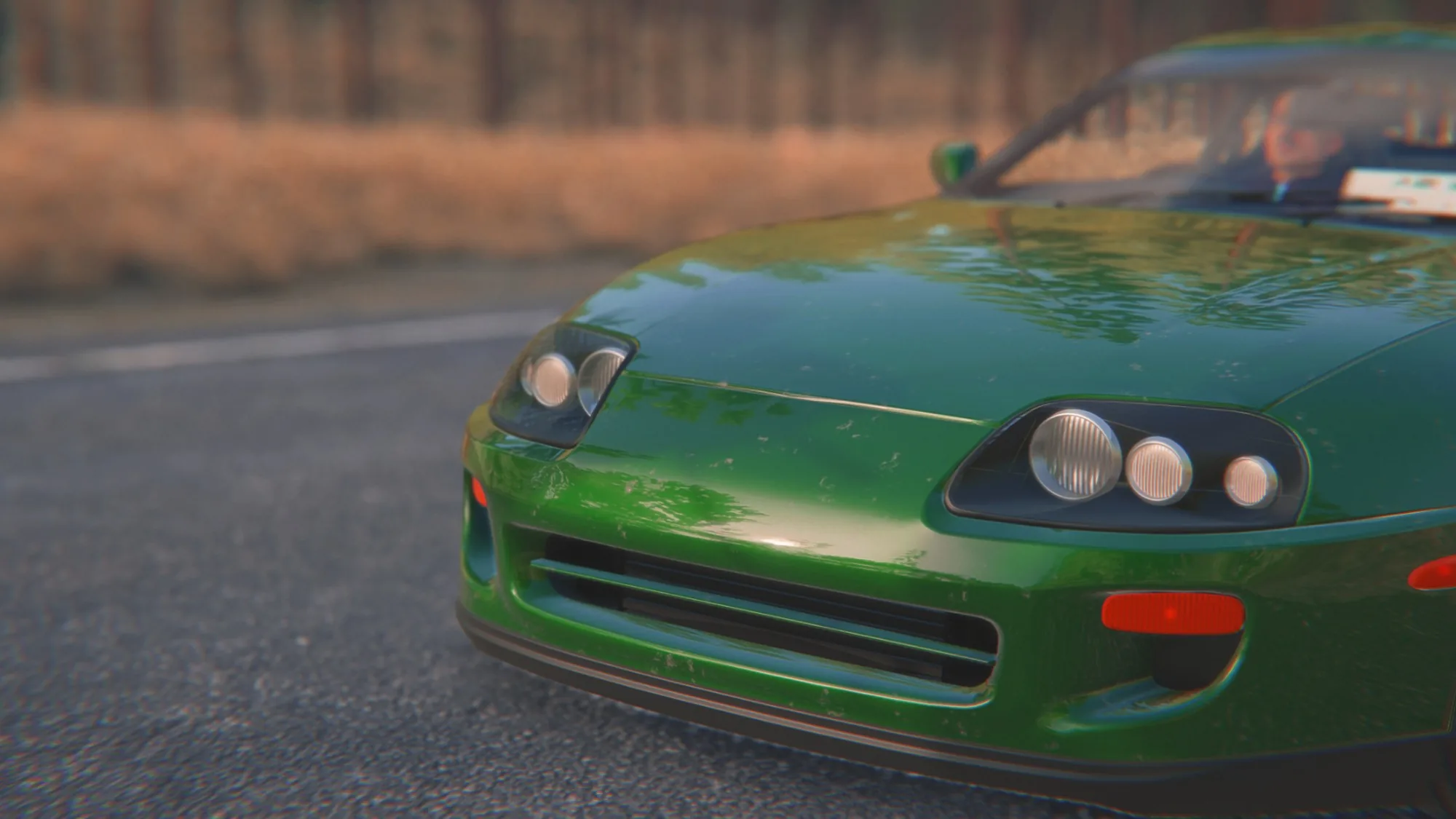
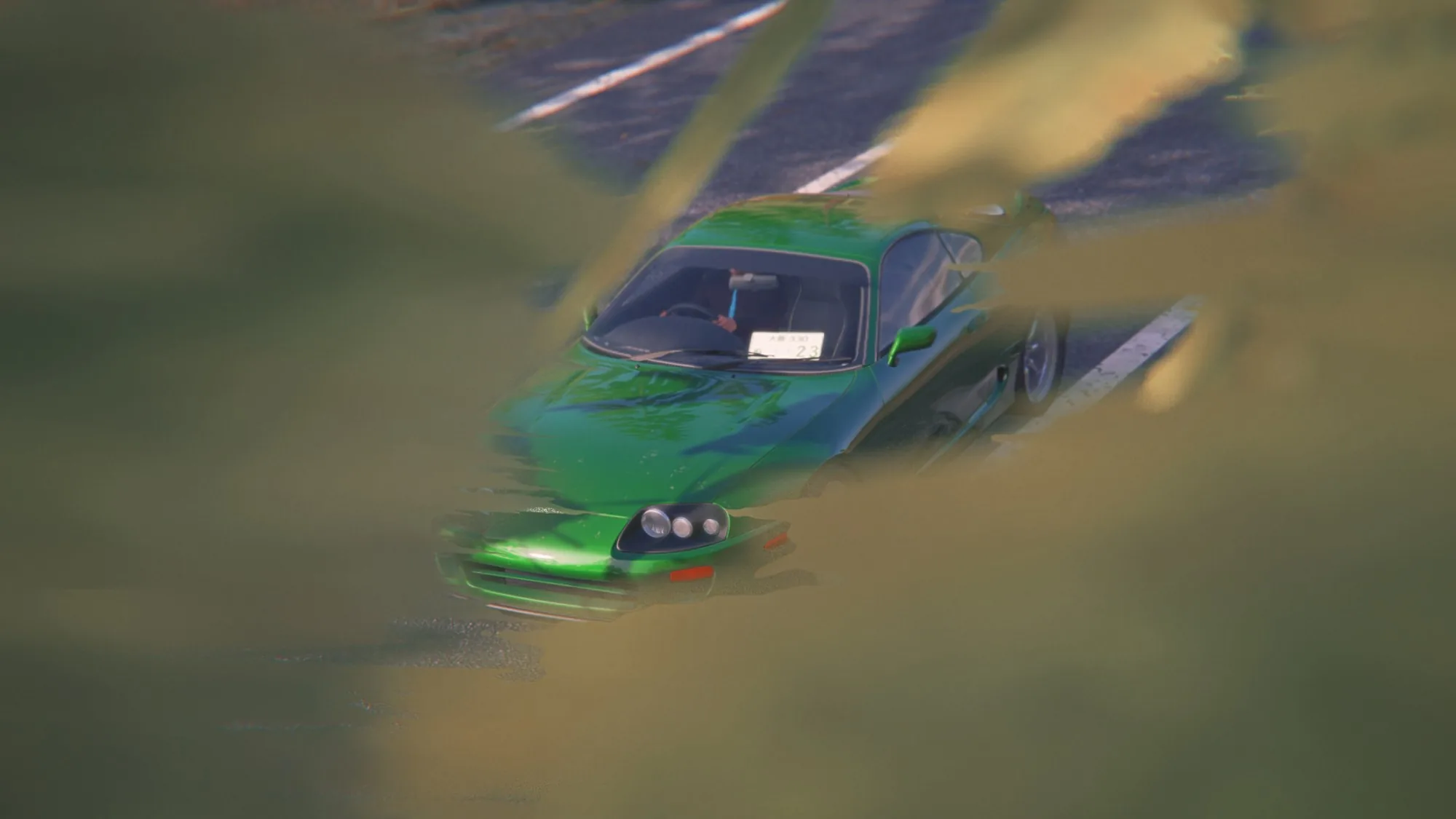
A new layered paint system
Paint now separates the colour underneath, the reflective material, clear coat, surface texture and effects such as metallic flakes or interference pigments. Moving a light or changing the camera angle reveals different parts of the finish.
There are 18 finish families: gloss, metallic, metallic flake, pearl, candy, chameleon, Xirallic-style pearl, matte, satin, chrome, twill carbon, plain-weave carbon, forged carbon, Kevlar, brushed metal, anodised metal, frozen metallic and holographic. Flake coverage and size, gloss, clear-coat texture and colour-shift settings change how each one reads. Wheels, suspension parts and brake components can use the same system where supported.
Wear and rust are appearance controls, while dust and dirt come from driving. Rain and snow have their own surface layers on top of the finish.
The paint screen treats a respray as a job you can preview. The colour picker has a colour wheel, hue, saturation and brightness controls, a hex field and an original-versus-new comparison, with an itemized yen quote that updates as you edit. APPLY PAINT pays for the job; leaving without applying restores the previous paint. MY PAINTS stores the complete recipe of an applied paint, finish settings included, so it can be reused on another part or build.
Interior painting covers seat fabric, accents and stitching, steering wheel, dashboard, door cards, headliner and belts where the car supports them.
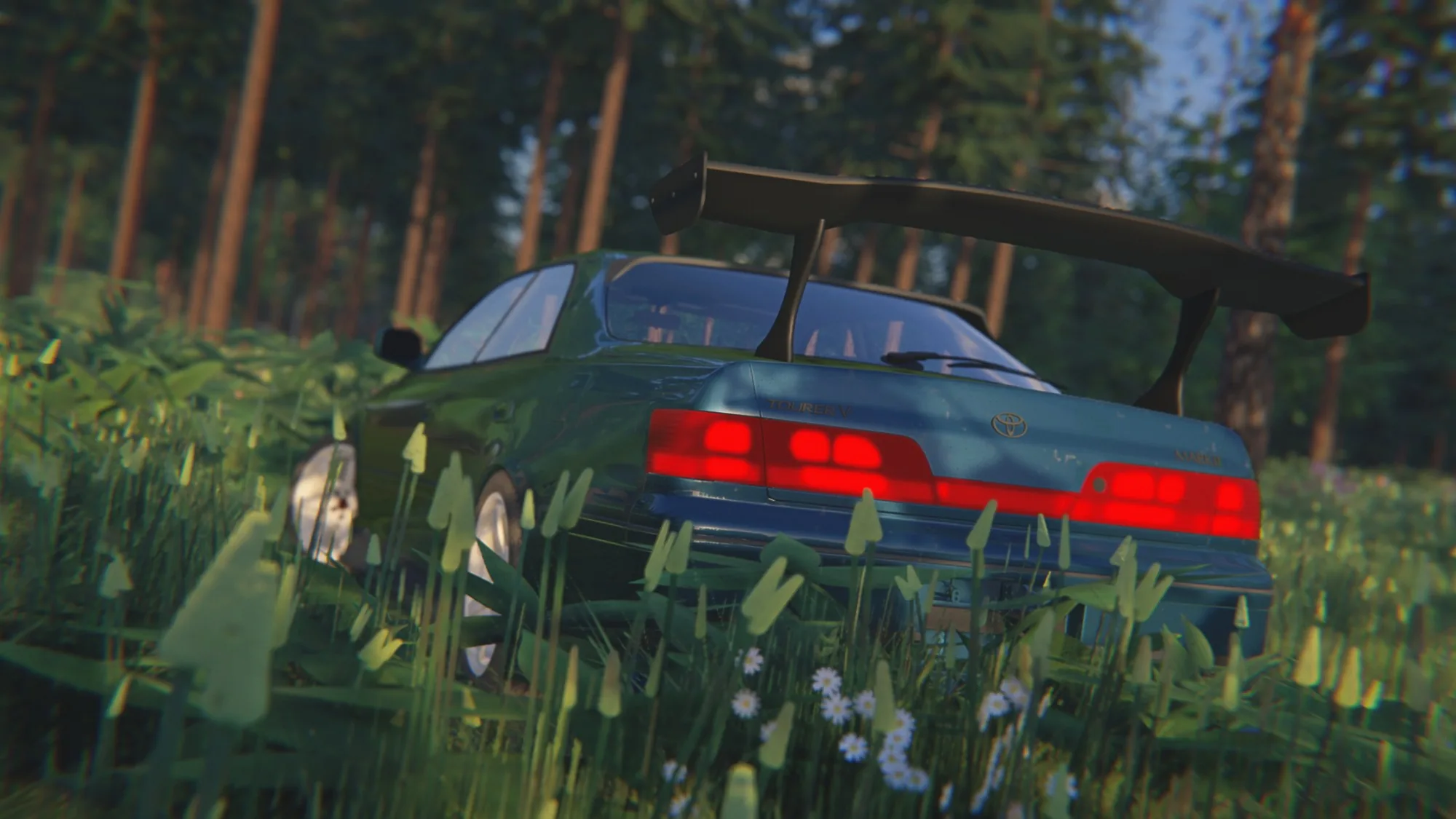
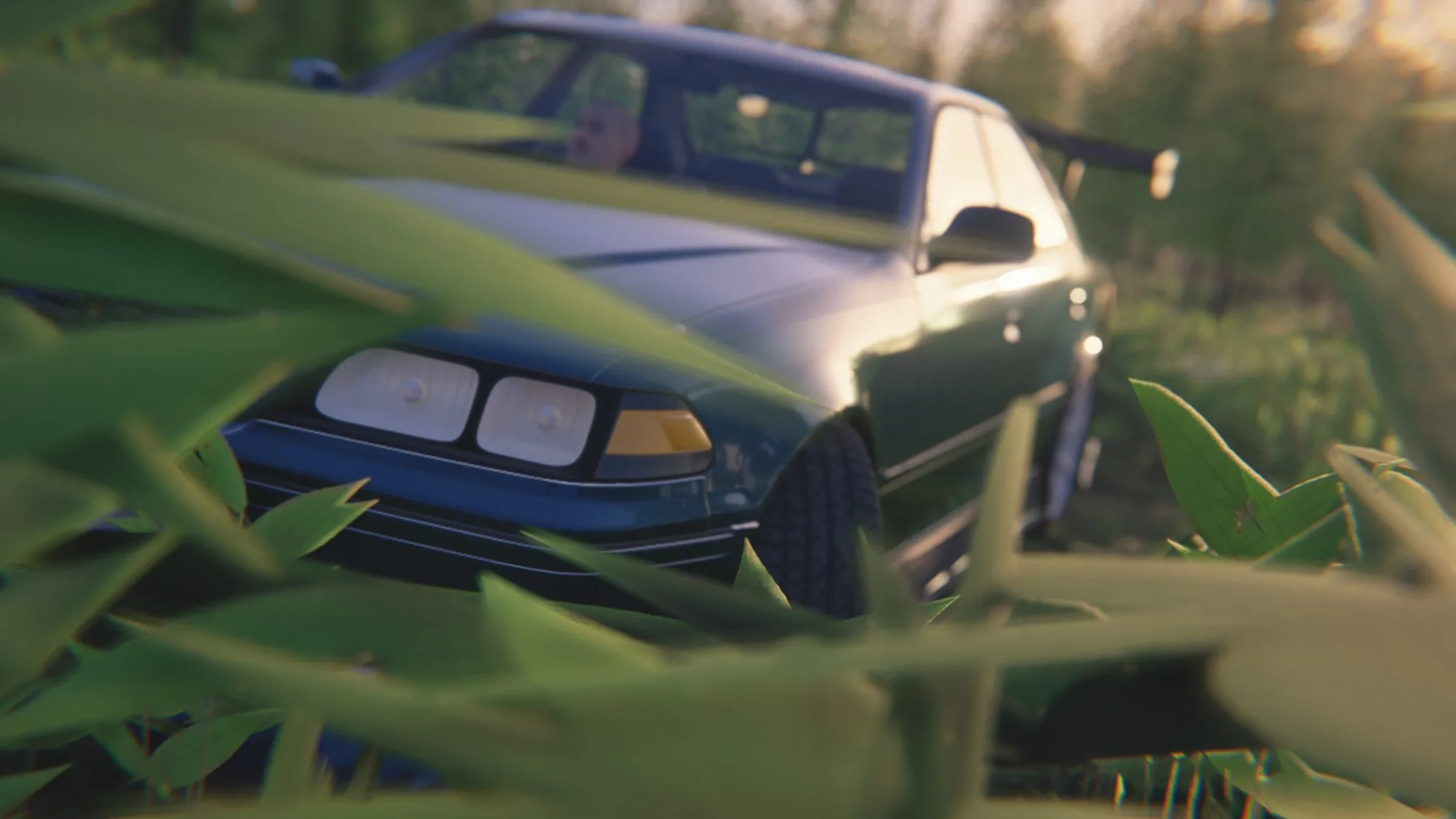
Tyre smoke rebuilt around the car
Tyre smoke has a new GPU effect with a close layer around the tyre and a larger plume. It starts across the contact area, can travel with the rotating tread, and then releases into the air. Young smoke has denser billows, older smoke expands and softens, and some of it lingers as a faint haze. A wake around the rear corners and boundaries around the body keep the cloud following the car's motion instead of looking like flat stamps dragged behind the bumper.
Emission follows contact, load, slip, temperature and surface, so ordinary cornering and a committed slide produce different clouds. Wet conditions suppress rubber smoke and use a spray effect instead. Quality and distance budgets limit the cost of overlapping transparent clouds.
New volumetric exhaust flames
The exhaust flame now has volume at the exhaust outlet, giving it depth as the camera moves around the pipe. A burst can ignite at the mouth, extend, break up, detach and burn away, with hot cores, turbulent edges, sparks and embers.
The engine still decides why the event happens. Fuel type, mixture, ignition retard, exhaust heat, event energy and anti-lag shape its colour and size, so an overrun pop, a rich tune, a shift cut and sustained anti-lag all look different. Gasoline gives a sootier orange flame and methanol a cleaner, paler one. Procedural pop and bang audio, flash light and heat haze are triggered with the combustion event. See the earlier Fuel, Fire and Afterfire post for the original system.
Weather, rain and seasons
There are six weather states: Clear, Cloudy, Overcast, Drizzle, Rain and Storm. Changes blend over time, and the wet states build toward a storm with stronger wind and lightning. Rain is a GPU-driven field of streaks, ripples and splash beads affected by wind, camera movement, the ground and shelter. Glass droplets grow, merge and run along the surface, wipers clear suitable panes, and the body has its own water layer that beads, dries and keeps the paint visible beneath it.
The Environment app offers Spring, Summer, Autumn, Winter and Live, where Live follows your current date. The date drives the sun's path and day length, and the forest reads the same calendar. Broadleaf trees move through fresh leaves, summer green, autumn colours and bare branches, individual trees turn at different times, cherry trees blossom, and falling leaves and petals follow each tree's state. Winter adds snow on the highest parts of the map, which can settle on the car and melt with heat. Roads stay clear, so this is not a snow-driving physics system.
Human characters
Kourenagi now has detailed male and female characters with skin, eyes, hair, facial hair, face presets, outfits and footwear. The login scene presents both, and the character editor frames the standing figure in the workshop and garage so you can inspect changes on the actual character.
They have procedural idle movement, limited secondary motion for hair and loose clothing, and a fitted seated pose with hands on the steering wheel. Appearance is saved, and multiplayer can show another driver's chosen look. Walking freely around the world is separate work that is not part of this update.
Workshop, garage and interfaces
The workshop has a persistent top bar, category navigation and task-based panels for Upgrades, Style, Tune, Paint, inventory, decals and Service. A shopping cart collects parts for preview and checkout, and a tuning handbook explains the adjustments. The dealership and private garage share the same layout language. A new workshop model, with vehicle bays, a lift, tool storage and overhead lighting, is in production.
A chassis dyno lets the car run on rollers and record measured power and torque. The driving HUD has an analog-style cluster for revs, boost, temperature, speed, gear, fuel and distance, and supported cockpit dashboards have working odometer and trip displays, tell-tales and instrument lighting.
The Music app has a new layout with Tracks and Stations views, shuffle, favourites and a compact card on the phone home screen. The workshop, garage and dealership share a matching music dock, and in the workshop the music plays from the modeled desk speakers in 3D. The soundtrack itself is unchanged from the Music for the Drive post.
Profile, replays and video
The new Profile app shows level, XP, total distance, time behind the wheel, top speed, drift totals and your best banked free-roam run, with a seven-day distance chart and a per-car breakdown. The car keeps its own odometer, while your statistics stay with you, so selling or gifting a car does not erase what you drove in it.
Gameplay replay keeps a rolling window of the active vehicle, its sounds, lights, skidmarks and effects. You can pause it, step through frames, change speed and move the camera around the car. Replays can be saved under a name and reopened later. Video tools add start and end markers, camera selection and clip recording. Capture has a real rendering and encoding cost, and it still needs more testing with several cameras and heavy effects.
Drifting, Quick Runs and events
Free-roam drifting has its own scoring model and a circular HUD with the current activity, pending score, multiplier and the time left before a run is banked. Angle, speed, sustained control, linked direction changes and proximity to obstacles all count. Impacts remove pending points, a heavy crash or spin-out can lose the run, and banked points stay earned. There are checks against farming one small area or slaloming down a straight road, and they are still being tuned.
The Quick Runs board now has 69 authored challenges, with four randomized contracts at a time, covering driving, drifting, stunts and endurance runs of five to twelve minutes. Multi-step contracts must be completed in order, and rewards wait in Notifications until you claim them.
A route-based drift event prototype exists in development builds, along with a delivery job system. Neither is a finished feature of the normal game yet.
Engine, damage and maintenance
The engine shop is now a catalog of families and editions with search and filters, plus a detail view with rated power and torque, compression, idle and limiter speeds. The catalog has been curated, with older entries kept where existing saves need them.
Engine sound is now generated from a live combustion and gas model instead of recorded loops. The engine, intake and exhaust voices are positioned separately around the car, and turbo sound has its own procedural spool, airflow and flutter.
Heat can now leave lasting damage. An overheated engine loses output while it cools, continued stress accumulates damage that stays with the car, and a damaged engine can lose power, misfire and stall. A bad downshift can over-rev the engine too. Repairs range from a limited gas-station repair to a full workshop overhaul.
The workshop's Maintenance section tracks engine oil, filters, plugs, coolant, driveline fluids, clutch and brake consumables. Wear follows distance, heat, revs, boost, dust, braking and clutch slip. An optional service book records work, notes and costs and stays with the car when ownership changes.
Other changes include modeled suspension, steering, brake and driveline parts, brake fitment limits on wheel choice, air suspension that lowers a parked car, and tyre dust, mud and rubber pickup that is purely visual. The decal editor has separate body and glass layer stacks with shapes, letters, numbers and imported PNG or JPG artwork, and window films are now installed presets you can preview before buying.
Gifting and optimization
Multiplayer now supports car and yen gifts. A gifted car keeps its saved build and condition, and interrupted transfers are recovered safely. This is a step toward the ownership ideas in the Ambition, Limits and Priorities post, not a finished trading system.
Optimization has continued across vegetation, reflections, shadows, vehicle audio, rain, smoke and replay capture. Performance depends on the scene, hardware, settings and number of cars, so there are no universal frame-rate claims here.
Development continues
Kourenagi is still being made by one person and remains in private testing. Access is limited to people I personally invite, and there is no public purchase or download available.
You can follow the work and discuss it in the Kourenagi Discord.
Development archive